

Functional Movement Disorder
Functional Movement Disorder (FMD) is a type of Functional Neurological Disorder (FND) that affects how the brain controls movement.
The symptoms are real. They can make walking, exercising, using your hands, maintaining balance, or simply moving through your day feel much harder than they should.
FMD can affect almost any type of movement and can look very different from one person to another. Symptoms may also vary depending on the activity, environment, or demands being placed on the nervous system.
What can Functional Movement Disorder look like?
FMD can involve many different types of movement symptoms, including:
Tremor or shaking
Jerking or sudden movements
Muscle spasms
Abnormal or sustained postures
Weakness or a feeling that a limb is difficult to control
Difficulty coordinating movements
Changes in walking pattern
Balance difficulties
Movements that feel stuck or difficult to initiate
Functional dystonia
Functional tic-like movements
You may have one primary movement symptom or several symptoms that overlap. Pain, fatigue, dizziness, cognitive symptoms, and sensory changes can also occur alongside FMD.

Why does movement feel so difficult?
Movement is not controlled by one part of the brain. Every movement requires information from your eyes, inner ear, muscles and joints, sensory systems, and brain networks involved in attention, planning, and motor control.
With FMD, the way these systems work together can become less automatic or less efficient. Movements that normally happen without much conscious thought may start to require much more effort and attention.
This is one reason that simply trying harder to control the movement isn't always the answer. Rehabilitation can help shift movement back toward more automatic and efficient patterns.
Current approaches to FMD rehabilitation focus on education, movement retraining, and practicing functional movement in a positive, non-judgmental environment.
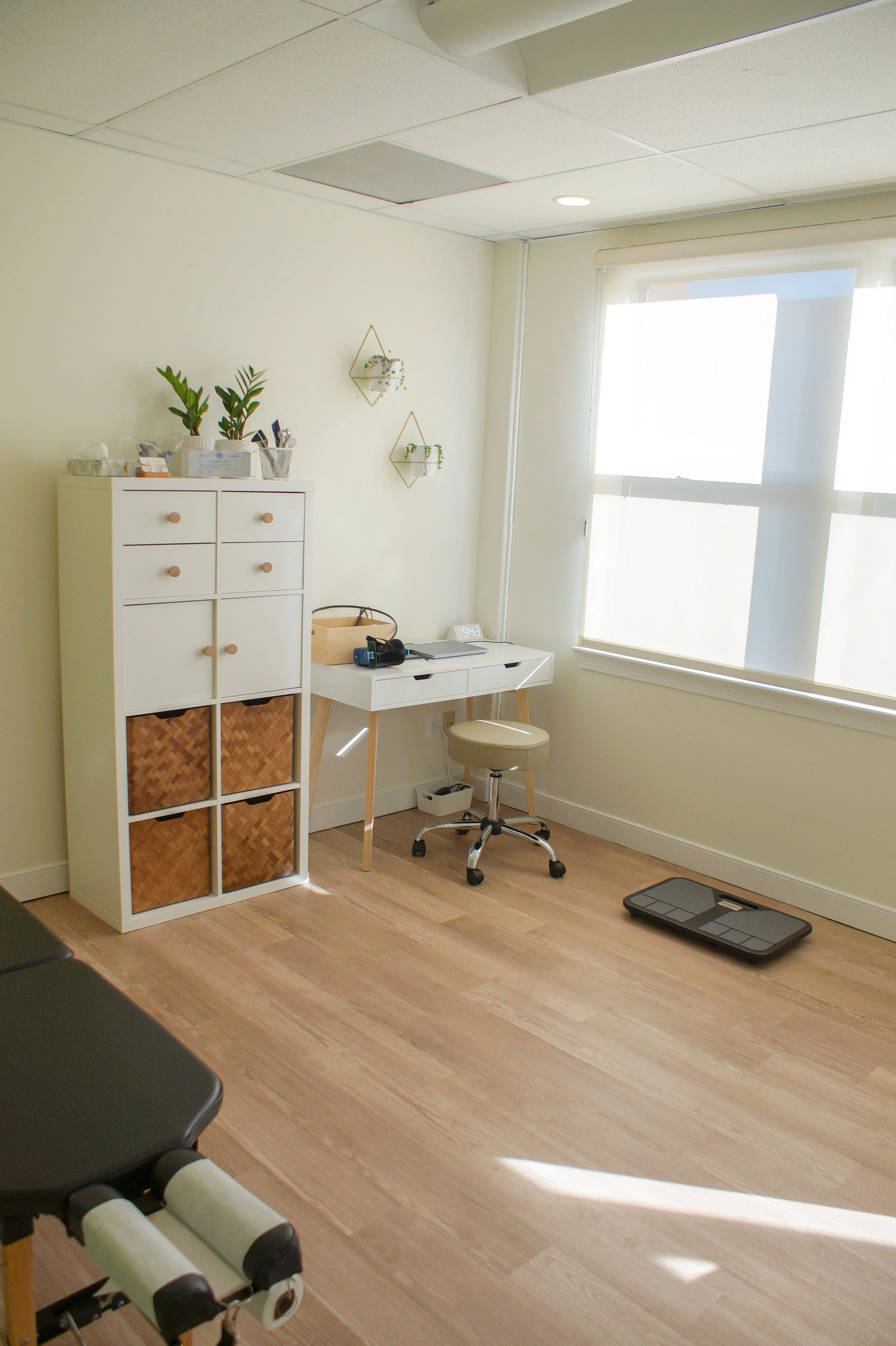
The goal is to understand what your nervous system is doing and what is getting in the way of the activities you want to perform.
If you have not already received an FMD diagnosis, evaluation by a neurologist or other qualified clinician may be recommended before beginning FMD-focused rehabilitation. FMD is diagnosed using positive clinical features rather than simply finding that other testing is normal.
What Happens during an Evaluation?
Your evaluation looks beyond the movement that brought you into the office.
Depending on your symptoms, we may assess:
Strength and coordination
Gait and balance
Proprioception and sensory processing
Eye movements and visual-motor control
Reaction time and cognitive-motor performance
How movement changes with different tasks or sensory demands
Exercise and activity tolerance
Heart rate and other signs of autonomic response when relevant
Rehabilitation at Clarity Brain and Body Clinic
FMD rehabilitation is individualized. There isn't one exercise that works for everyone, because the goal is to retrain the specific movement patterns and functional skills that are giving you trouble. Research supports specialized physical rehabilitation approaches for FMD, with studies showing improvements in motor symptoms, mobility, activity, and quality of life.
Depending on your presentation, rehabilitation may include:
Movement retraining:
Practicing more automatic, efficient movement patterns rather than focusing on forcing a movement to happen.
Cognitive-Motor & Dual-Task Training:
Adding cognitive demands or another task while you move so that movement becomes less dependent on conscious attention.
Sensory & Proprioceptive Training:
Using changes in sensory input, body position, and feedback to improve your awareness and control of movement.
Oculomotor Rehabilitation:
Addressing visual or eye-movement challenges when they are contributing to difficulty with movement, balance, or spatial awareness.
Balance & Gait Training:
Working on stability, walking mechanics, weight shifting, and complex movement when balance or gait is affected.
Progressing to Real Life:
As skills improve, we add speed, cognitive demands, sensory challenges, and complexity, to make movement more similar to goals outside the clinic.
The Autonomic Nervous System Matters
For some people with FMD, movement symptoms are only part of the picture. Orthostatic intolerance, fatigue, exercise intolerance, changes in heart rate, and other autonomic symptoms can also affect how well the nervous system tolerates activity.
The relationship between FND and autonomic function is an area of ongoing research, and autonomic symptoms can overlap with FND and commonly co-occur with conditions such as POTS and orthostatic intolerance.
When relevant to your presentation, your evaluation may include assessment of your response to position and activity. Rehabilitation may also incorporate strategies to improve autonomic regulation and activity tolerance, such as breathing exercises, vagus nerve stimulation, graded activity, and appropriately progressed cardiovascular or orthostatic training.
The goal is to make sure we're not looking at movement in isolation when your ability to move is also being affected by how your nervous system responds to activity.
Can Functional Movement Disorder Get Better?
Yes. Improvement is possible!
FMD can be frustrating when movements feel unpredictable or seem to change from one situation to another. But these symptoms do not mean that your ability to move is permanently lost.
With the right rehabilitation approach, movement can become more efficient and automatic. Progress looks different for everyone, but treatment is focused on helping you build back the skills you need for the activities that matter to you.
Working with your healthcare team:
FMD is often best managed as part of a coordinated plan of care. Depending on your symptoms, your healthcare team may include a neurologist, rehabilitation provider, occupational therapist, mental health clinician, or other specialists.
At Clarity Brain and Body Clinic, we focus on the neurological and functional aspects of movement rehabilitation. When another type of evaluation or treatment is needed, collaboration with or referral to the appropriate provider may be part of your care.
Explore other FND resources
Functional Neurological Disorder can affect much more than movement. Learn more about other types of functional neurological symptoms and how they can be addressed through rehabilitation and coordinated care.
Why Choose Clarity Brain and Body Clinic for FMD?
FMD can make movement feel unpredictable, frustrating, and difficult to trust. At Clarity Brain and Body Clinic, we take a closer look at how your nervous system is controlling movement and use individualized neurological rehabilitation to help you develop more efficient and functional movement patterns.
Your symptoms are real, and meaningful improvement is possible.
Schedule your free discovery call with Dr. Timko to learn how a personalized rehabilitation approach can help you move with greater control and confidence.